
Par 4, 465 yards

The closing hole has become a 465-yard challenge with the extension of the tee in 2002. An accurate drive is a must, and an expanded bunker complex requires a clout of 335 yards to carry. Trees to the left of the bunkers prevent a bailout on that side, and the elevated green is guarded by bunkers.


Hole story

Significant changes since opening
- Double bunker constructed left of fairway landing area, 1967
- Tee moved back 55-60 yards and moved to the golfer's right five yards, 2002
- Bunker complex adjusted, 2002
About the plant
- Deciduous, flowering tree
- Dioecious evergreen tree with spiny, dull green leaves
- From March to June, male and female bear inconspicuous green or white flowers.
- Female yields bright red poisonous berries in winter, if male is also present.
Where and how the plant grows
- Grows to 35 to 50 feet high and 15 to 25 feet wide
- Shade tolerant
- Moist, well-drained, acidic, sandy soil
- High drought tolerance
- Propagation by cuttings


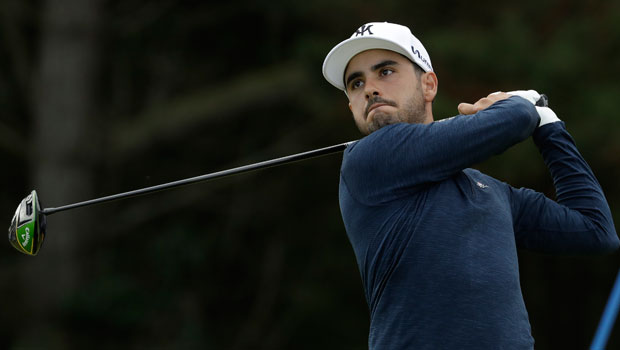 Abraham Ancer
 Daniel Berger
 Christiaan Bezuidenhout
 Sam Burns
 Patrick Cantlay
 Cameron Champ
 Stewart Cink
 Corey Conners
 Fred Couples
 Cameron Davis
 Bryson DeChambeau
 Tony Finau
 Matthew Fitzpatrick
 Tommy Fleetwood
 Sergio Garcia
 Lucas Glover
 Talor Gooch
 Austin Greaser
 Stewart Hagestad
 Brian Harman
 Padraig Harrington
 Tyrrell Hatton
 Russell Henley
 Lucas Herbert
 Garrick Higgo
 Harry Higgs
 Tom Hoge
 Max Homa
 Billy Horschel
 Viktor Hovland
 Mackenzie Hughes
 Sungjae Im
 Aaron Jarvis
 Dustin Johnson
 Zach Johnson
 Takumi Kanaya
 Si Woo Kim
 Kevin Kisner
 Brooks Koepka
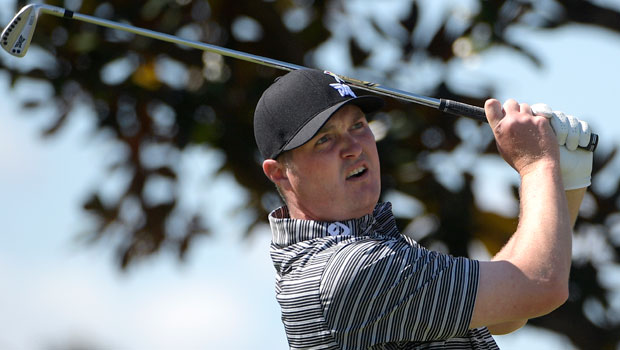 Jason Kokrak
 Bernhard Langer
 K.H. Lee
 Min Woo Lee
 Marc Leishman
 Luke List
 Shane Lowry
 Sandy Lyle
 Robert MacIntyre
 Hideki Matsuyama
 Rory McIlroy
 Guido Migliozzi
 Larry Mize
 Francesco Molinari
 Collin Morikawa
 Kevin Na
 Keita Nakajima
 Joaquin Niemann
 Jose Maria Olazabal
 Louis Oosthuizen
 Ryan Palmer
 Thomas Pieters
 James Piot
 Seamus Power
 Jon Rahm
 Patrick Reed
 Justin Rose
 Xander Schauffele
 Scottie Scheffler
 Charl Schwartzel
 Adam Scott
 Laird Shepherd
 Webb Simpson
 Vijay Singh
 Cameron Smith
 Jordan Spieth
 Sepp Straka
 Hudson Swafford
 Justin Thomas
 Erik van Rooyen
 Bubba Watson
 Mike Weir
 Lee Westwood
 Danny Willett
 Matthew Wolff
 Gary Woodland
 Tiger Woods
 Will Zalatoris